Part1
Written examination
A 100-question examination.

The Mini-Fellowship › Assessment and the credential
The program is competency-based: a certificate is issued when a participant has demonstrated what the course set out to teach, in four parts, and not for attending. This page sets out what each part involves, what the certificate says, and what it does not claim.
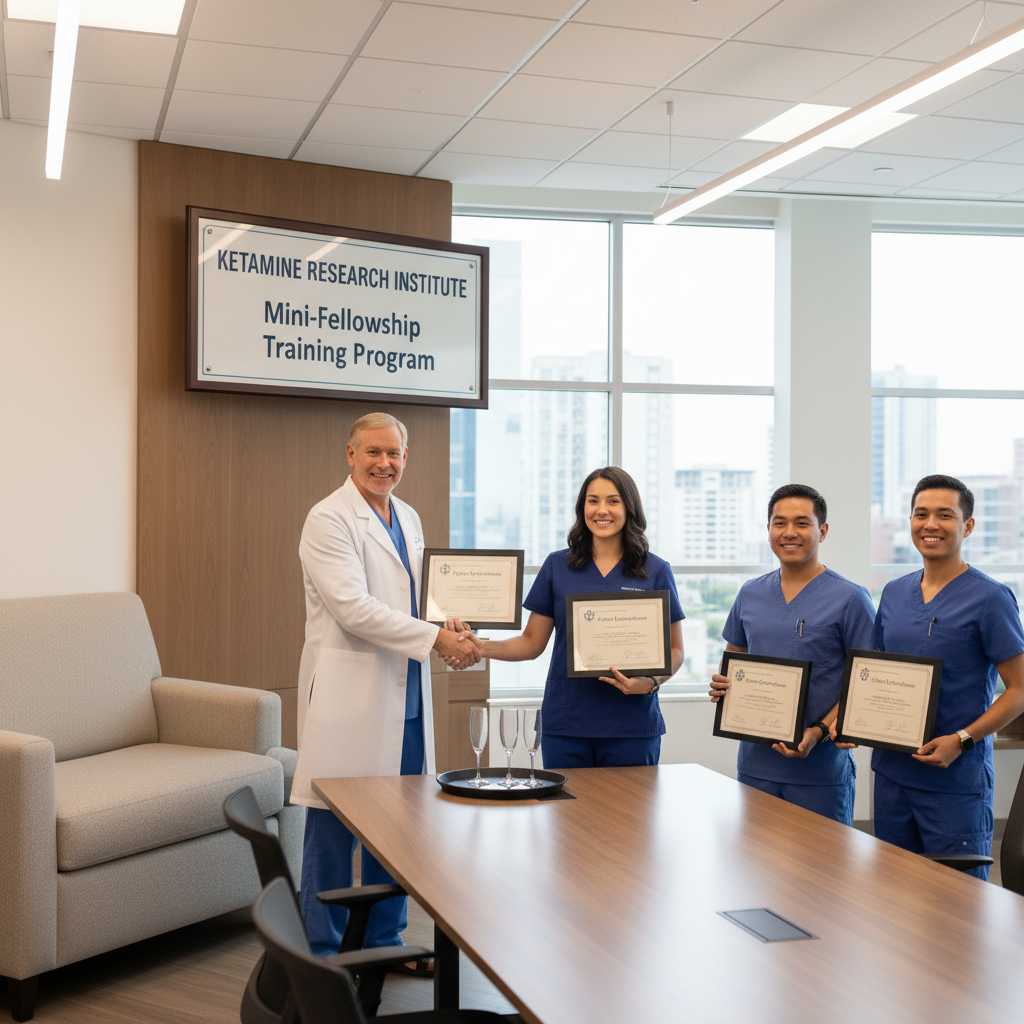
The four parts
The assessment runs on Day 4, with nothing else scheduled against it. The written examination is in the morning and the case-based assessment after lunch. Each part looks at a different kind of competence, because knowing the pharmacology and being safe at the chair are not the same thing.
If a participant does not demonstrate one of them, the certificate is not issued that day and the mentorship period is used for remediation: further teaching, supervised practice or case work, followed by re-assessment. Nobody is passed on attendance, and nobody is left without a route to the standard.
A 100-question examination.
Direct observation in the infusion suite.
Structured cases, discussed and defended.
The records produced during the practicum.
The certificate
The modules completed, the clinical training performed under supervision, the assessment passed, and the date.
A statement of what was assessed and what the graduate demonstrated, signed by the course director.
Permission to use the KRI Trained and Certified Clinician badge in practice materials, with the Institute named as the body that provided the training.
Inclusion, if the graduate wishes, in KRI’s directory of trained clinicians.
The mark names the Institute that provided the training. That is the whole of what it claims.
Just as important
Board certification is granted by a specialty board after residency training and its own examinations. This is a certificate of training from an institute.
No national body accredits ketamine training programs, and KRI does not claim accreditation from one.
It does not extend your scope of practice. What you may do is set by your license and your state.
A board, credentialing committee or insurer decides for itself what it accepts. The certificate documents what you did; it does not bind anyone.
Using the credential
Graduates receive a handbook on describing the training and the method to patients and referring clinicians. Its rules are short.
“Trained and certified by the Ketamine Research Institute in concentration-targeted ketamine infusion” names the training and who gave it.
The mark carries the Institute’s name for a reason. Used without it, “certified” invites a reader to supply a body of their own.
Avoid “board-certified in ketamine therapy”, “accredited” and constructions that imply a recognized specialty where none exists.
Leave out “leading”, “top”, “foremost” and comparisons with other clinicians or clinics. Describe the training and the method instead.
Describe what the treatment involves and what the evidence supports, and state that psychiatric use is off-label.
If you stop practicing the method, or the twelve-month re-assessment is not completed, retire the mark from your materials.
At twelve months
The mentorship year closes with a structured review of cases, documentation and outcomes from the first year of independent practice. It is where the credential is confirmed against what a graduate is actually doing, rather than against what they could do on a single afternoon in Sarasota.
Being found
Graduates who complete the assessment can be listed in KRI’s directory of trained clinicians. Patients and referring clinicians use it to find someone near them who was trained in this method.
Questions
The certificate is not issued that day, and that is not the end of it. We set out exactly what was missing, and the mentorship period is used to put it right: further teaching, supervised practice or case work, whatever the gap calls for. The participant is then re-assessed. If competency still cannot be demonstrated after that, the certificate is not issued.
No. The written examination is closed book. The case-based evaluation is a discussion, where reasoning matters more than recall.
The certificate records training you completed and does not expire. The mark is tied to current practice of the method and to the twelve-month re-assessment.
Twenty-six Type II CME credits are available. Type I CME credit is not offered.
Yes, and graduates do. What any committee, board or insurer makes of it is their decision.
Four clinicians at a time, in Sarasota. We set the dates with each cohort rather than publishing a calendar. For current availability, call 800-850-6979 or email training@ketamineinstitute.com.