Training › Graduates

Graduates, in their own words

What clinicians said after the four days, grouped by the thing they were talking about rather than by who said it. Most of it is not about the lectures.

Participants observing an infusion during the course
TrainedFewer than 100 clinicians
CohortFour, twelve a year
Session datesSet with each cohort
QuotationsPublished with permission
Outcome claimsNone made here
DirectoryListing is optional
About these quotations. They are from written correspondence and course feedback, published with the graduates’ permission and lightly edited only for length and punctuation. They describe those clinicians’ experience of the course. They are not evidence of patient outcomes, they are not a representative sample, and nothing on this page should be read as a claim about what ketamine therapy will do for anyone’s patients.

On arriving with experience and finding gaps anyway

Several of the clinicians who get the most out of the four days come in already using ketamine.

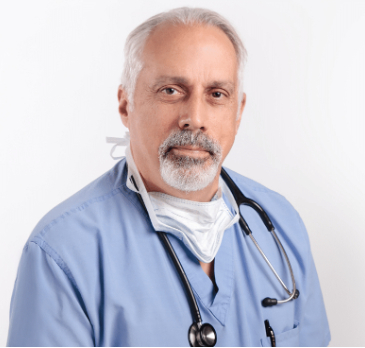
Mark Garwin, MD
Mark Garwin, MDAnesthesiologist

When I enrolled in your program, it was not my intent to participate by exhaustively asking questions, but it became apparent that I had overestimated my fund of knowledge.

Although I have extensive clinical experience with ketamine, and I work at expanding my understanding of the fundamental physiology and pharmacology involved in the administration of ketamine for mental health disorders, I had no idea how much I didn’t know.
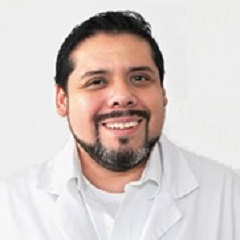
Ricardo Febres Landauro, MD
Ricardo Febres Landauro, MDNeurologist and psychiatrist, Salzburg, Austria

One year ago, I started using ketamine for the treatment of my depressive patients without formal training, using the standard protocol published in the literature. I decided to attend the training program to enhance my skills.

I can now understand ketamine from a pharmacological, anesthesiology, psychiatric, medico-legal and therapeutic perspective.

On starting from nothing

Others arrive with no ketamine experience at all. The course is built to work for both.

David Smith, MD
David Smith, MDInternal medicine and family practice

I thoroughly enjoyed the course and thought it was a good mix of science and practical knowledge. It was very helpful as I had no clinical experience with ketamine and just a little knowledge from what I’ve read. It gave me a clear road map moving forward.

Rixt Luikenaar, MD
Rixt Luikenaar, MDObstetrics and gynecology

The course was absolutely helpful. I needed this information to know how to start. Now I know what I need to obtain.

I felt I needed the hands-on information to be able to know what my clinic should be like, and now I have a lot of ideas. Also, I needed the scientific approach of how to calculate what plasma concentration can work for whom and how to possibly change it.

On the experiential session

Receiving an infusion is voluntary and separately consented. It is the part graduates mention most often afterward.

Edward Campbell, MD
Edward Campbell, MDAnesthesiologist

About the “ketamine experience” — to see the differences between the way people respond to the experience really brought it home.

David Smith, MD
David Smith, MDInternal medicine and family practice

Having done it now, I can appreciate how difficult it would be to explain it without having done it.

Rixt Luikenaar, MD
Rixt Luikenaar, MDObstetrics and gynecology

You have to experience it to be able to serve others appropriately. Thanks for offering access to a personal experience, even for those who would not consider it otherwise.

On the paperwork, which nobody expects to care about

The documentation library turns out to matter more than most applicants anticipate.

Theresa Burick, MD
Theresa Burick, MDIntegrative medicine

We appreciate your offer to send your forms and documents, as this will give us a great start in providing the right documentation, consent, and so on — which, interestingly, our malpractice carrier is requesting.

The course was exactly what I was hoping for: evidence-based, scientifically yet practically oriented, allowing us not only to understand the basics of these treatments but some insights as to how to improve our successes and minimize the failures through careful patient selection and optimization.

Edward Campbell, MD
Edward Campbell, MDAnesthesiologist

Having the day-to-day forms, infusion notes, and protocol and SOP forms is just so exceedingly helpful.

On what happens after the four days

The mentorship year is the part that is hardest to describe in advance.

Erin Boyd, DO
Erin Boyd, DOLumina Mind Health

Seems no matter how much you read and study, every patient can be different, so definitely an art to this, and grateful to have you as an experienced practitioner in all this.

It’ll be great to have more providers in my local area who are on board with sending me their patients and can trust what I’m doing here.

Who they are

A small group, deliberately.

Fewer than 100

Clinicians have completed the Mini-Fellowship. Four per session, twelve a year, since the course began.

Across specialties

Anesthesiology, psychiatry, neurology, internal medicine, family practice, obstetrics and gynecology, integrative medicine, emergency medicine.

Across licenses

Physicians, nurse practitioners, physician assistants and CRNAs, taught the same curriculum in the same room.

Internationally

Graduates have come from outside the United States as well as from across it.

Questions

About the graduates.

Can I speak to a graduate before I apply?

Yes. Tell us what you want to ask about and we will put you in touch with someone whose practice is closest to yours. We ask first — graduates are not a reference list to be handed out.

Are these quotations edited?

Lightly, for length and punctuation only, and published with permission. Nothing has been added.

Do you have outcome data from graduates’ practices?

Not in a form we would publish as evidence. Individual practices report their own results to us during the mentorship year, and those are case-level observations, not a study. We would rather say that than dress it up.

How do I find a graduate near me?

The clinician directory lists graduates who have chosen to be listed.

Ketamine is FDA-approved as an anesthetic. Its use for depression, chronic pain and other psychiatric indications is off-label. Nothing on this page is a claim about treatment outcomes.

Ask one of them

Tell us what you want to know and we will ask a graduate whose practice resembles yours whether they are willing to talk to you.